
A private tea ceremony in Kyoto is most rewarding when you choose for the host, setting and explanation rather than the number of extras in a package. Our researched shortlist is Camellia, MAIKOYA, Tea Ceremony Koto and the private experience sold by Japan Experience. Each is worth investigating for a different reason, but the exact venue, language, seating and exclusivity must be confirmed before booking.
This guide is based on provider information checked on 28 August 2026. It is not a set of personal reviews, and we have not independently assessed every instructor. “Private” should mean a session reserved for your party, not simply a small group advertised with photographs of an empty room.
Private tea ceremony in Kyoto: compare the options
| Provider | Why consider it | Question to ask |
|---|---|---|
| Camellia | Choice of private venues in eastern and western Kyoto | Which location best fits the day’s route and access needs? |
| MAIKOYA | Tea experiences with optional kimono combinations | How much of the package is ceremony time? |
| Tea Ceremony Koto | A tea-focused visit near Kinkaku-ji | Which private format and language support are available? |
| Japan Experience | A private activity booked through a travel provider | Who hosts the session and where exactly does it take place? |
Four experiences to investigate
Camellia for a venue that fits your route
Camellia lists private tea ceremonies at its Garden Teahouse in western Kyoto and Flower locations in the east. The Garden Teahouse is described as wheelchair accessible, while the venue options have different arrangements for kimono rental. Do not assume an inclusion at one location applies to all of them.
We would start here when venue choice is a priority. Select the side of Kyoto you are already visiting, then ask about the route from the entrance to the tea room, seating and toilets if access matters. A broad accessibility label should be followed by details relevant to your party.
MAIKOYA for tea with a kimono option
MAIKOYA publishes several tea formats, including private tea and kimono combinations at Kyoto locations. That makes it a candidate for visitors who want dressing and tea within one organised experience rather than booking them separately.
The tradeoff is attention. If your main interest is tea practice, ask how the time is divided between dressing, photography, explanation and the ceremony itself. Confirm the exact venue and age rules for the selected product. Different formats may serve different groups, so use the actual booking terms rather than a general provider description.
Tea Ceremony Koto for a focused visit in northern Kyoto
Tea Ceremony Koto is located near Kinkaku-ji and lists shared, private and premium experiences. Its introduction describes English explanations by instructors associated with the Urasenke tradition. It is a useful candidate when a northern Kyoto visit is already in the itinerary.
Ask what distinguishes the private session from the premium product: duration, group size, teaching depth, room access or other inclusions. The highest-priced option is not automatically the most appropriate. Choose the format that gives you enough explanation without stretching the day beyond your attention or energy.
Japan Experience for booking through a travel provider
Japan Experience’s private tea activity describes a private setting with a tea master, explanations and wagashi. This route can suit travellers who prefer to coordinate an activity through a broader travel service.
Clarify the operational details before paying: named venue, meeting point, host language, total duration, cancellation terms and whether any transfer is included. Booking through an intermediary does not remove the need to understand who will deliver the experience.
What makes a session feel special?
Privacy alone is not the whole value. A thoughtful session allows time to notice the utensils, observe the host’s movements, understand the sequence and ask respectful questions. Choose a setting where you can listen without rushing to the next reservation.
For a first encounter, clear explanation may matter more than elaborate formality. For a returning visitor, a deeper discussion of the school, seasonal choices or utensils may be more useful. Tell the provider what you hope to learn instead of relying on the word “authentic” in a sales description.
How to compare the price
Check whether pricing is per person, per group or a combination of a private-session fee and guest charges. Compare the same party size and include any kimono rental, sweets, interpreter, transfer and seasonal supplement. Note how much time is actually spent in the tea room.
As an illustration, a ¥24,000 group session for four people is ¥6,000 each, while a ¥10,000 per-person session totals ¥40,000 for the same group. These are examples for comparison, not current quotations from the providers above. Evaluate the format and inclusions before deciding which represents better value.
Comfort, etiquette and family suitability
Ask about chairs or alternative seating if kneeling is uncomfortable. Give ages when travelling with children and check the selected session’s minimum age, duration and expectations. If anyone has dietary requirements, explain them before booking rather than assuming the sweets can be changed on arrival.
Arrive on time, follow the host’s instructions and ask before taking photographs. Avoid turning the session into an extended photo shoot unless that is explicitly part of the programme. Comfortable, respectful clothing and an attentive manner matter more than dressing for a particular social-media aesthetic.
Where to place it in your Kyoto day
Allow a buffer before and after. A western Kyoto session fits more easily with nearby visits than with a tightly timed reservation across the city. An eastern session can work alongside a modest Higashiyama outing. Avoid scheduling the ceremony immediately after a rushed transfer or a large meal.
Frequently asked questions
Do I need to wear kimono?
Not necessarily. Some providers sell kimono combinations, but it is an optional part of many visitor experiences. Check the chosen product and select it because you want the dressing experience, not because you assume tea requires it.
Should I book a private or shared session?
Private is useful when your group wants more flexibility for questions, a quieter setting or particular access arrangements. A shared introduction may be sufficient if you simply want to learn the basics. Confirm what the private premium actually changes.
Plan the surrounding day with our Kyoto luxury travel guide, explore the relationship between tea and dining in our kaiseki introduction, and keep room for cultural activities in the Japan itinerary. Choose one suitable session and arrive with time to pay attention.
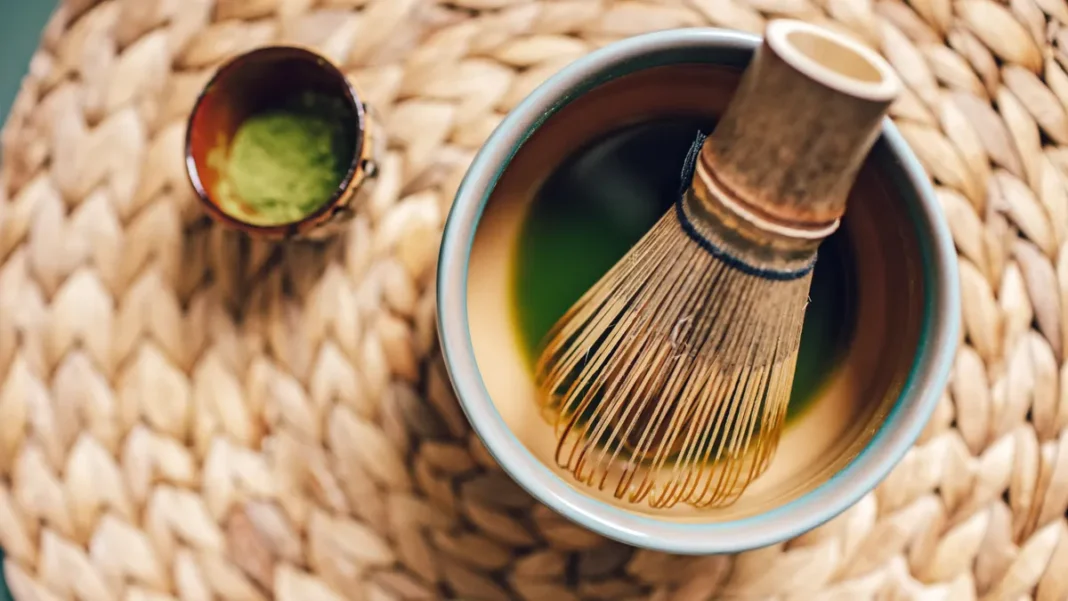
Featured image: ROMAN ODINTSOV / Pexels, used under the Pexels licence. This is an editorial illustration of the destination or theme, not a photograph of a reviewed property or venue.


