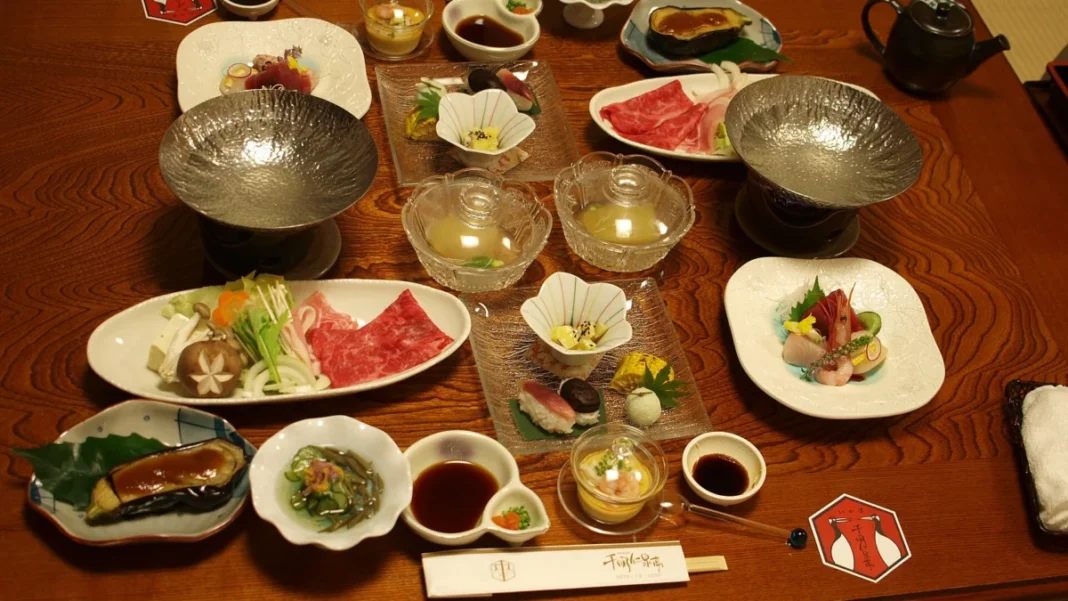

Kaiseki is Japan’s most refined form of dining, a carefully sequenced procession of small, seasonal courses built on a philosophy borrowed directly from the tea ceremony. It is easy to book a kaiseki dinner without understanding what makes it different from an ordinary tasting menu, so here is what actually defines the tradition.
Two Kaiseki, Written Differently
Confusingly, two different words are both romanized as ‘kaiseki’ and pronounced identically, but written with different characters. Cha-kaiseki (懷石) is the original form: a simple meal served by the host during a formal tea ceremony, rooted in Zen Buddhist monastic cooking and codified in the 16th century by tea master Sen no Rikyu. Its guiding principle is wabi-sabi, restraint, seasonality, and beauty in simplicity, over abundance. Kaiseki (会席) is the later, more familiar form most visitors encounter at restaurants today: a multi-course banquet-style meal that grew out of sake-drinking gatherings and became widespread in the mid-19th century. When people talk about booking ‘a kaiseki dinner’ in Kyoto or Tokyo today, this is almost always the version they mean.
How a Kaiseki Meal Unfolds
A full kaiseki dinner typically runs seven to fourteen courses, served one at a time in a fixed order, each showcasing a different cooking technique: raw, simmered, grilled, steamed, vinegared. Common elements include an appetizer course, a clear soup built around dashi, a sashimi course using the day’s best catch, a hassun course pairing one ingredient from the sea with one from the mountains, and a final rice and pickle course before dessert. The exact ingredients change constantly with the season, but the structure and sequence stay fixed, which is part of what makes kaiseki feel less like a menu and more like a ritual.
Kaiseki vs. Kappo: Formal or Counter-Style
Traditional kaiseki, sometimes called ryotei-style, is formal: private tatami rooms, set courses, and a higher price point. Kappo is the more relaxed alternative, counter-style dining where you sit directly in front of the chef, who often improvises around what’s fresh that day and what you’ve enjoyed so far. Kappo tends to be a little cheaper, more conversational, and a genuinely good entry point for first-time visitors or solo diners who find the formality of a private ryotei room intimidating.
What It Actually Costs
Dinner kaiseki at accessible, well-regarded restaurants runs roughly ¥8,000 to ¥15,000 per person. At the famous ryotei and Michelin-starred establishments covered in our Tokyo and Kyoto guides, expect ¥20,000 to ¥30,000 or more, before drinks. The price difference reflects ingredient sourcing, the chef’s reputation, and the room itself as much as the food, since the tableware, the seasonal flower arrangement, and the setting are all considered part of the experience rather than an afterthought.
Why Kyoto Specifically
Kyoto is treated as kaiseki’s spiritual home because it combines the two histories that built the cuisine: centuries as the seat of the imperial court, and centuries as the center of Japan’s tea ceremony tradition. Restaurants like Kikunoi Honten and Hyotei, both covered in our guide to Tokyo’s Michelin-starred restaurants, have held Three Michelin Stars for well over a decade specifically because they represent that dual heritage at its highest level.
If You Have Dietary Restrictions
Kaiseki is built around seafood and dashi, which makes it genuinely difficult territory for vegetarians and vegans, and Japan as a whole is not known for flexible accommodation on short notice. Some restaurants can adapt with advance warning, occasionally offering a version closer to shojin ryori, the vegetarian temple cooking kaiseki itself grew out of, but this needs to be arranged directly with the restaurant well before your visit, ideally at the time of booking rather than on arrival. Checking a restaurant’s website or calling ahead specifically about dietary needs will save a wasted reservation at one of the harder-to-book properties on this list.
For where to actually book, see our national guide to fine dining in Japan.


