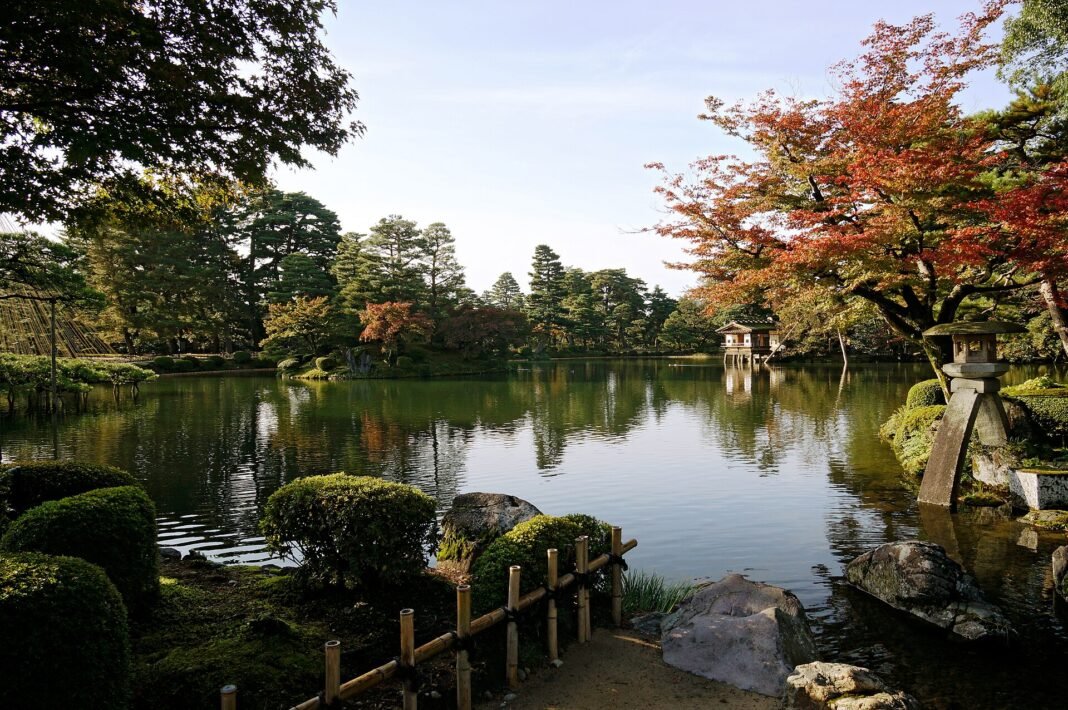

Kanazawa is one of Japan’s most rewarding cities for luxury travellers who want culture without Kyoto’s crowds. The former castle town of the powerful Maeda clan preserves a celebrated garden, atmospheric teahouse districts and a living tradition of fine crafts, from gold leaf to lacquer and Kutani porcelain. It is also one of the country’s great seafood cities, especially in winter. With the Hokuriku Shinkansen linking it directly to Tokyo, two or three nights here fit easily into a wider itinerary.
This editorial guide draws on official tourism and venue information and our wider destination coverage. Opening hours, exhibitions and hotel details change, so confirm them before travel.
Why visit Kanazawa?
- Kenrokuen, widely ranked among Japan’s three great landscape gardens.
- Preserved districts of wooden teahouses and samurai residences.
- Craft heritage, including the great majority of Japan’s gold leaf production.
- Contemporary art at the 21st Century Museum of Contemporary Art.
- Seafood and kaiseki drawn from the Sea of Japan.
What to see in Kanazawa
Kenrokuen garden
Kenrokuen developed over generations as the outer garden of Kanazawa Castle and is celebrated for its ponds, stone lanterns and seasonal changes. In winter, the pine trees are protected with yukitsuri, rope supports arranged in conical shapes to prevent branches breaking under snow, one of the city’s signature sights. Visit at opening time for the calmest experience.
Kanazawa Castle Park
Next to Kenrokuen, the castle grounds include carefully reconstructed gates, turrets and the Gyokuseninmaru garden. Combine the two in one morning.
Higashi Chaya district
Higashi Chaya is Kanazawa’s best-preserved geisha teahouse district, lined with latticed wooden buildings. Some historic teahouses are open to visitors, and several shops sell gold leaf products. Early morning or evening is far quieter than midday.
Nagamachi samurai district
Earthen walls and narrow lanes mark the former residences of samurai families. The Nomura family residence, with its compact garden, is a popular stop.
21st Century Museum of Contemporary Art
The circular glass 21st Century Museum of Contemporary Art is known for installations such as Leandro Erlich’s Swimming Pool. Some exhibits require timed tickets, so check availability in advance.
D.T. Suzuki Museum
This quiet museum dedicated to the Zen Buddhist scholar features a contemplative water garden and is a calm counterpoint to the busier sights.
Crafts and shopping
Kanazawa’s gold leaf, lacquerware and Kutani porcelain make refined souvenirs. For a deeper experience, ask your hotel to arrange a private visit to a workshop or a hands-on gold leaf session. Buying directly from respected makers supports local artisans and helps you understand what you are paying for. Look for pieces with clear maker information rather than mass-produced souvenirs.
What to eat in Kanazawa
Kanazawa’s cuisine draws on the Sea of Japan and local Kaga traditions. In winter, snow crab, including the small female kobako-gani, and nodoguro (blackthroat seaperch) are highlights. Omicho Market is the city’s lively food market, best visited in the morning. For dinner, the city has excellent sushi counters and kaiseki restaurants, often more relaxed and accessible than their Tokyo or Kyoto equivalents. See our guide to kaiseki and our winter crab season guide.
Where to stay in and around Kanazawa
- Central hotels: international hotels near Kanazawa Station, such as Hyatt Centric Kanazawa, are convenient for Shinkansen arrivals and day trips.
- Historic ryokan: small, long-established inns in the city centre offer an intimate traditional stay with kaiseki dining. Book well ahead, as capacity is limited.
- Kaga Onsen nearby: the hot spring towns south of the city offer luxury ryokans such as Beniya Mukayu in Yamashiro Onsen, ideal for combining culture with onsen relaxation.
Our luxury ryokan guide compares traditional stays across Japan.
Getting to Kanazawa
The Hokuriku Shinkansen connects Tokyo and Kanazawa directly in roughly two and a half to three hours. GranClass seats are available on some services; see our Shinkansen Green Car and GranClass guide. From Kyoto and Osaka, limited express trains connect with the Shinkansen extension at Tsuruga. Komatsu Airport also serves the region.
When to visit
Each season suits Kanazawa. Spring brings cherry blossoms at Kenrokuen and the castle, autumn colours the gardens, and winter offers snow-dusted scenery, yukitsuri and the best seafood. Winter is cold and can be wet, so pack accordingly. The Noto Peninsula to the north was severely affected by an earthquake in January 2024; if you plan to travel beyond Kanazawa, check current conditions and local guidance.
A two-day Kanazawa plan
- Day 1: Kenrokuen at opening, Kanazawa Castle Park, lunch near Omicho Market, the 21st Century Museum in the afternoon, kaiseki dinner.
- Day 2: Higashi Chaya early morning, a craft workshop visit, Nagamachi samurai district and the D.T. Suzuki Museum, then sushi for dinner or a transfer to Kaga Onsen.
Frequently asked questions
How many days do you need in Kanazawa?
Two full days cover the main sights comfortably. Add a night at Kaga Onsen for a relaxed ryokan stay.
Is Kanazawa worth visiting in winter?
Yes. Winter brings yukitsuri in the gardens, snowy scenery and peak season for snow crab and other seafood.
How do you get from Tokyo to Kanazawa?
Take the Hokuriku Shinkansen directly from Tokyo, a journey of roughly two and a half to three hours.
Featured image: 663highland / Wikimedia Commons, licensed under CC BY 2.5. Editorial illustration of the destination.


