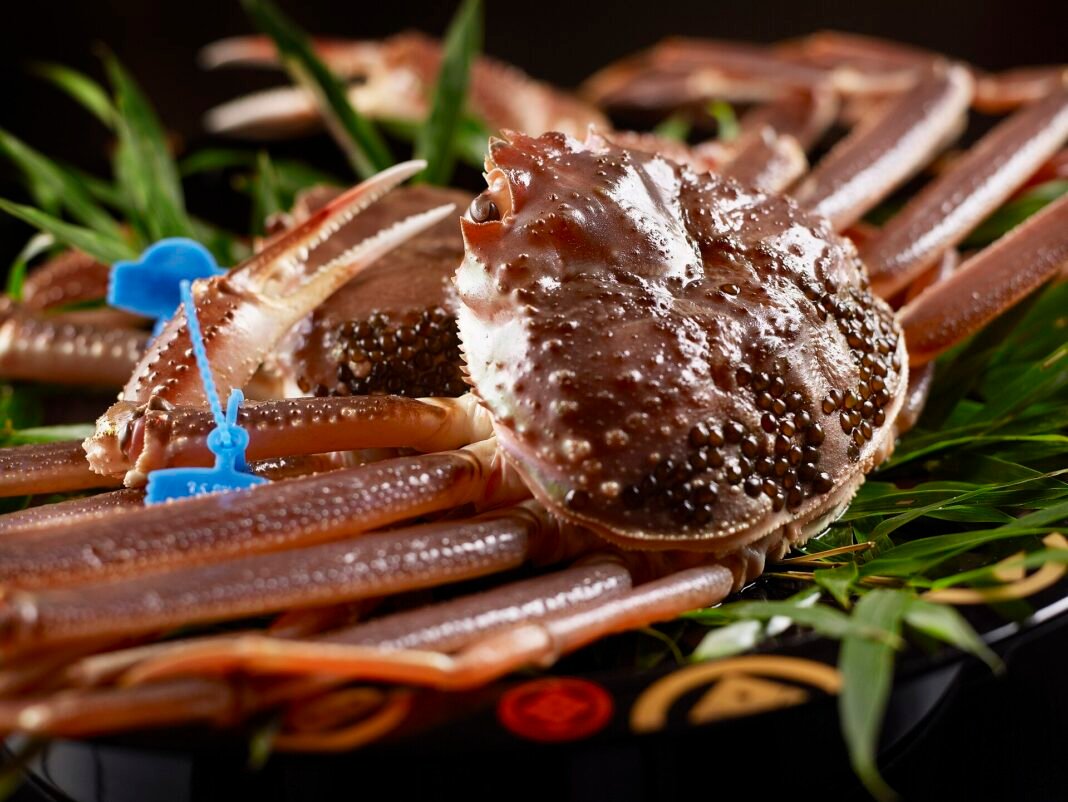

Winter crab season in Japan is one of the country’s great seasonal food rituals. Along the Sea of Japan coast, the snow crab (zuwaigani) fishery usually opens in early November, and from then until early spring travellers head to onsen towns and ryokans for multi-course crab dinners. The finest male crabs are sold under regional brand names such as Matsuba crab in the San’in region and Echizen crab in Fukui, often carrying tags that identify the port where they were landed.
This is an editorial planning guide based on regional tourism and fisheries information and our fine dining coverage. Season dates, catch quality and prices vary year to year, so confirm details with your ryokan or restaurant before booking.
When is snow crab season in Japan?
The Sea of Japan snow crab fishery typically opens in early November. Male crabs can generally be caught into March, while the season for smaller female crabs (known locally by names such as seko-gani or kobako-gani) is much shorter, usually ending around the turn of the year. December to February is the classic period for crab-focused trips, combining fresh catches with snowy onsen scenery.
| Name | Where | What it means |
|---|---|---|
| Matsuba-gani | San’in coast, including Hyogo and Tottori | Branded male snow crab landed at designated ports |
| Echizen-gani | Fukui Prefecture | Branded male snow crab from the Echizen coast |
| Seko-gani / Kobako-gani | Sea of Japan coast | Smaller female crab with roe, available for a short season |
Brand tags are a useful sign of origin, but quality still varies by size and condition. Top restaurants and ryokans select individual crabs and may quote prices per crab rather than per person.
How crab is served
A crab kaiseki dinner typically moves through several preparations, which might include:
- Sashimi: very fresh legs served raw, sometimes briefly chilled so the flesh opens like a flower.
- Boiled crab: whole crab simply boiled in salted water, considered the purest way to taste quality.
- Grilled crab: legs grilled over charcoal for a sweeter, smoky flavour.
- Kani-suki or crab hot pot: crab cooked at the table with vegetables, finished as a rice porridge.
- Kani-miso: the rich crab innards, sometimes warmed in the shell with sake.
If you are new to the format, our guide to what kaiseki is explains the structure of a seasonal multi-course meal.
Where to go for winter crab
Kinosaki Onsen, Hyogo
Kinosaki Onsen is the classic crab destination: a willow-lined canal town with seven public bathhouses, where visitors stroll between baths in yukata and return to their ryokan for crab dinners. It is close to ports landing Matsuba crab, and many inns build their winter plans entirely around crab. The town is reachable by limited express train from Kyoto or Osaka.
The Tottori and Hyogo coast
Ports and onsen towns along the San’in coast offer quieter alternatives to Kinosaki, often with sea views. A private driver makes it easier to combine fish markets with a ryokan stay.
Fukui and the Echizen coast
Fukui is home to Echizen crab. Awara Onsen and seaside inns along the Echizen coast are good bases, and the area is accessible since the Hokuriku Shinkansen extension reached Fukui. It also combines well with a stay in Kanazawa.
Kanazawa
Kanazawa’s Omicho Market and fine restaurants serve kobako-gani and male snow crab in season, making the city an easy option if you prefer a refined urban base to a ryokan. It also combines easily with a winter visit to Kenrokuen garden.
Booking a crab ryokan
- Book early for weekends and holidays. The best inns in Kinosaki and Fukui fill quickly from December to February.
- Read the plan carefully. Ryokans often sell several crab plans at different prices, varying by crab grade, size and number of courses.
- Ask about branded crab. If a tagged Matsuba or Echizen crab matters to you, confirm it is included.
- Mention allergies clearly. Shellfish allergies need to be flagged at booking, not on arrival.
- Consider a private bath. Our guide to ryokans with private onsen lists stays with in-room baths.
Crab etiquette and practical tips
Crab is eaten slowly, and staff will often prepare or crack the crab for you at a luxury inn. Use the supplied crab forks and do not be afraid to ask for help. Expect crab dinners to be long and generous; lunch the same day is best kept light. Our fine dining guide covers wider etiquette for formal meals in Japan.
Frequently asked questions
When does crab season start in Japan?
The snow crab season on the Sea of Japan coast usually opens in early November. Male crabs are generally available into March, while female crabs have a much shorter season.
What is the difference between Matsuba crab and Echizen crab?
Both are male snow crabs. The names are regional brands: Matsuba crab comes from the San’in coast, including Hyogo and Tottori, while Echizen crab comes from Fukui.
Where is the best place to eat crab in Japan?
Kinosaki Onsen is the best-known crab destination, but the Tottori coast, Fukui and Kanazawa are all excellent choices during the season.
Featured image: Nishimuraya Kinosaki Onsen / Wikimedia Commons, licensed under CC BY 2.0. Editorial illustration of the theme.


