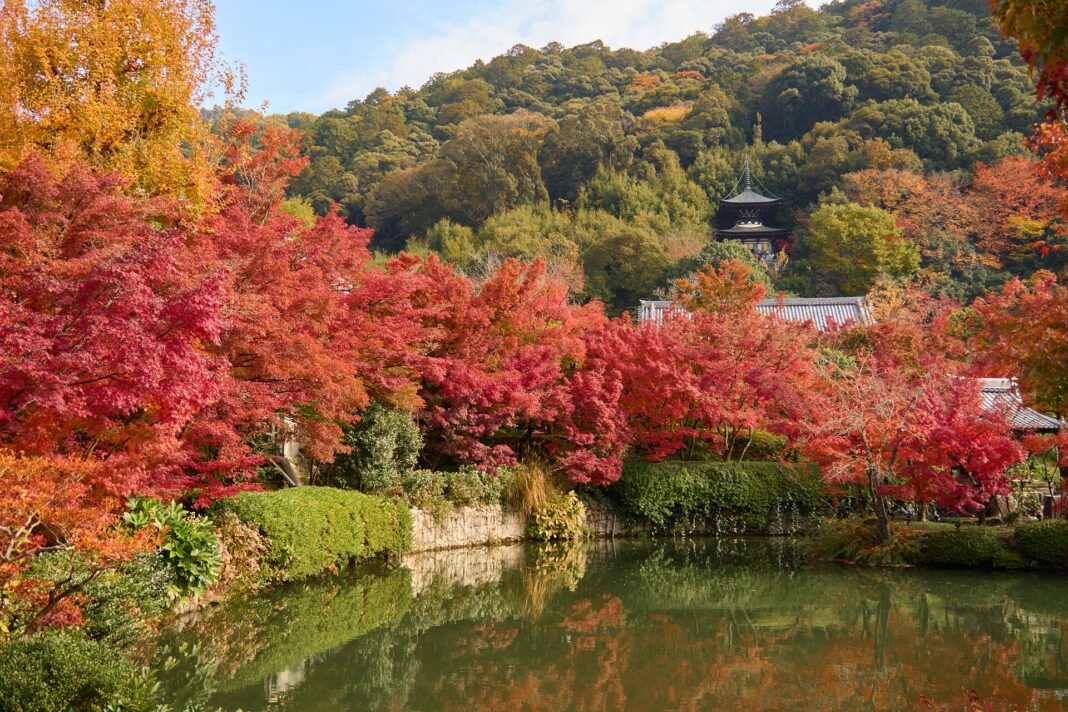

Kyoto autumn leaves usually reach their best between mid-November and early December, although the exact timing shifts every year with temperature and altitude. For a luxury trip, the goal is not to see every famous maple. It is to be in the right place at a quieter hour, staying somewhere that makes early starts and evening illuminations easy. This guide covers timing, the gardens worth prioritising, hotels by area and the booking decisions that matter most.
It is an editorial planning guide built from official tourism and venue information and our existing Kyoto coverage. Opening hours, illumination dates and admission arrangements change each season, so confirm them with each venue before you travel.
When do Kyoto autumn leaves peak?
In central Kyoto, colour typically builds through November and peaks in the second half of the month. Higher and cooler areas to the north, such as Ohara and Kurama, often turn earlier than the city centre, while some low-lying gardens hold their colour into early December. Weather companies such as tenki.jp and the official Kyoto tourism site publish seasonal updates that are worth checking a week or two before arrival.
| Period | What to expect | Planning implication |
|---|---|---|
| Early November | Northern hills begin to colour; city still mostly green | Good for Ohara, Kurama and mountain drives |
| Mid to late November | Typical peak in central and eastern Kyoto | Highest hotel demand; book rooms and restaurants early |
| Late November to early December | Late colour in some gardens; fallen leaves on moss | Often calmer, with a softer, quieter beauty |
If your dates are fixed, build flexibility into the plan rather than chasing a forecast. Keep two or three gardens in reserve and decide each morning.
Gardens and temples worth prioritising
Eikando (Zenrin-ji)
Eikando is one of the temples most closely associated with autumn colour in Kyoto, and it often holds evening illuminations during the season. It sits near the Philosopher’s Path in eastern Kyoto, so it pairs naturally with Nanzen-ji. Expect it to be busy at peak; an evening session or an opening-hour visit is usually more rewarding than mid-afternoon.
Tofuku-ji
Tofuku-ji’s view across a valley of maples from the Tsutenkyo bridge is one of Kyoto’s best-known autumn scenes. It draws large crowds at peak weekends. Arrive at opening time on a weekday if you can, and give yourself time in the temple’s gardens rather than only the bridge.
Kiyomizu-dera and Higashiyama
Kiyomizu-dera’s wooden stage above the trees is spectacular in autumn and frequently offers night viewing during the season. The surrounding lanes are among the most crowded in the city, so we suggest a very early walk before shops open, then retreating to a hotel or a reserved lunch as visitor numbers rise.
Arashiyama and Sagano
Western Kyoto combines river scenery with smaller temples such as Hogon-in, Jojakko-ji and Gio-ji, where moss and maples create a calmer atmosphere than the main bamboo grove. Staying in Arashiyama overnight changes the experience completely, because you can walk before day visitors arrive.
Ohara and Kurama for an earlier, quieter option
Sanzen-in and Hosen-in in Ohara, and the mountain temple area of Kurama, are good choices for early November or for travellers who prefer fewer crowds. Allow a half day at least; a private car makes a combined Ohara and northern Kyoto day far more comfortable than public buses.
Where to stay for autumn in Kyoto
Your hotel location shapes the whole trip in koyo season, because traffic and crowds make crossing the city slower than usual.
- Eastern Kyoto and Higashiyama: Park Hyatt Kyoto sits within walking distance of Kiyomizu-dera and the Higashiyama lanes, ideal for early walks.
- Arashiyama: Hoshinoya Kyoto, reached by boat along the Oi River, and Suiran, a Luxury Collection Hotel, place you in the west of the city for dawn and dusk visits.
- Northern forest setting: Aman Kyoto has its own wooded garden near Kinkaku-ji, so seasonal scenery begins at the hotel itself.
- Central riverside: The Ritz-Carlton, Kyoto on the Kamogawa is a practical base if you plan to split time between east and west.
For a fuller comparison, see our guide to luxury hotels in Kyoto. If you prefer a traditional inn, our luxury ryokan guide covers options beyond the city.
How to avoid the worst crowds
- Go at opening time. The first hour at a major temple is often the calmest of the day.
- Choose weekdays. Peak weekends in late November are the busiest of Kyoto’s year.
- Use evening illuminations selectively. They are atmospheric but can be crowded; one or two are usually enough.
- Book a private driver or guide. A licensed guide can sequence visits around crowd patterns and handle logistics. See our private tea ceremony guide for a quieter cultural addition to the day.
- Limit yourself to two major sites a day. Leave room for a long lunch and an unplanned garden.
Dining in koyo season
Autumn is one of the most celebrated seasons in kaiseki, with dishes built around matsutake mushrooms, chestnuts, persimmon and maple-leaf presentation. Top Kyoto restaurants book out early for November, so reserve as soon as your dates are firm and confirm cancellation terms. Our explainer on what kaiseki is will help you choose the right format.
Booking checklist for autumn in Kyoto
- Reserve hotels several months ahead for mid to late November.
- Check each temple’s official site for seasonal hours, illumination dates and any timed-entry arrangements.
- Book key dinners as early as possible and note cancellation windows.
- Arrange private transfers for luggage and longer excursions.
- Pack layers: mornings and evenings can be cool by late November.
Frequently asked questions
What is the best week to see autumn leaves in Kyoto?
In most years, the second half of November is the most reliable window for central Kyoto. Northern areas can colour earlier, and some gardens stay vivid into early December.
Is it worth paying for night illuminations?
One or two are worthwhile for the atmosphere, especially at temples such as Eikando or Kiyomizu-dera. Check dates and entry arrangements in advance, since they vary each year.
Where should I stay to avoid crowds?
Choose a hotel within walking distance of the area you most want to see, such as Higashiyama or Arashiyama, so you can visit early in the morning before day visitors arrive.
For wider planning, see our Kyoto luxury travel guide and the best time to visit Japan for luxury travel.
Featured image: lumoplank / Wikimedia Commons, released under CC0 1.0. Editorial illustration of the theme, not a photograph of a reviewed property.


