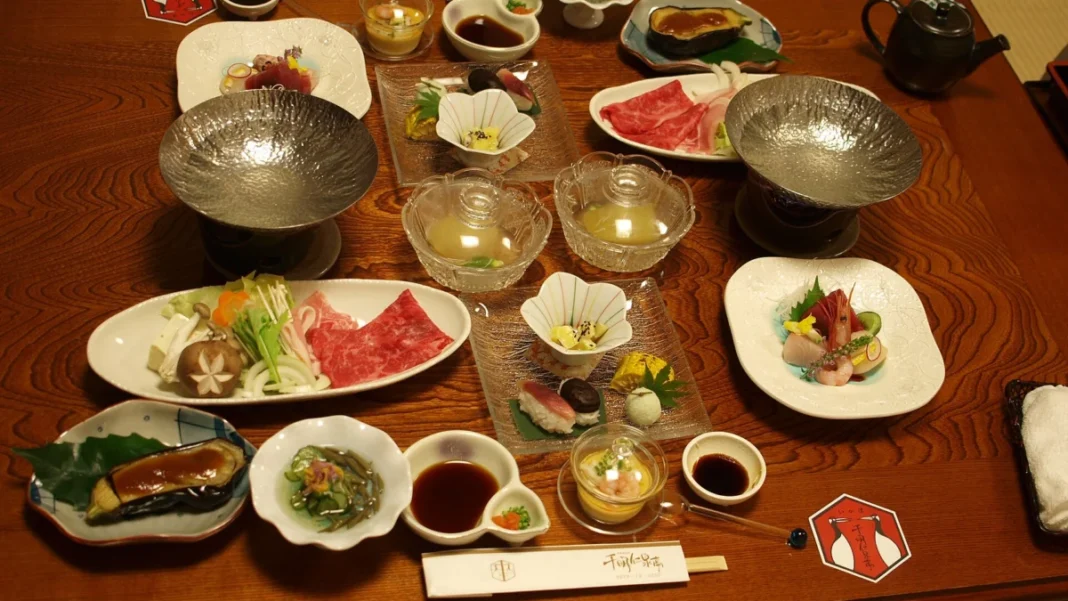

Fine dining in Japan is easier to plan when you choose the dining format before chasing a famous restaurant name. A sushi counter, a kaiseki dinner and a chef-led French tasting menu can all be memorable, but they offer different experiences. Start with the food you want, your comfort with a fixed menu, your budget and the practicalities of getting a reservation.
Reviewed 28 August 2026. This is a research-based planning guide, not a record of personal restaurant visits. Restaurant recognition and booking conditions can change.
Fine dining in Japan: choose your experience
| Format | What it describes | Question before booking |
|---|---|---|
| Kaiseki | A seasonal Japanese multi-course meal | Can the kitchen accommodate your dietary requirements? |
| Sushi omakase | A sushi meal selected by the chef | What is included in the course and how long is the sitting? |
| Kappo | Japanese cooking often served with closer interaction at a counter | Is this a fixed course or is there a choice of dishes? |
| French or other tasting menus | A multi-course experience shaped by the particular restaurant | Are pairings optional and are supplements clearly priced? |
| Wagyu-focused dining | Beef prepared in formats such as steak, yakiniku or sukiyaki | Which cooking style and cut are you actually booking? |
The table is a starting point, not a universal description of every restaurant. Read the actual menu and booking conditions. Two restaurants using the same label may differ substantially in formality, portion size, language support and seating arrangements.
Kaiseki and omakase are not interchangeable
Kaiseki describes a dining tradition and meal structure, while omakase means leaving the selection to the chef. Omakase is not limited to sushi. A restaurant can offer a chef-selected Japanese course without serving a procession of nigiri.
For readers deciding between the two, the practical question is whether you want a broad progression of Japanese dishes or a more focused counter experience. Consider your tolerance for unfamiliar ingredients and whether a fixed sequence suits everyone in your party. Our kaiseki explainer and omakase guide explore those distinctions.
Tokyo: use Michelin recognition accurately
The MICHELIN Guide Tokyo 2026 announcement lists 160 starred restaurants: 12 with Three Stars, 26 with Two Stars and 122 with One Star. Myojaku was promoted from Two to Three Stars. This is not the same as entering the guide directly at Three Stars, and newly awarded stars are not necessarily newly opened restaurants.
Recognition can help build a shortlist, but it does not establish whether a meal fits your tastes, dates or budget. Consult the current restaurant listing rather than an old award mentioned in an article. A restaurant’s reputation and its present Michelin status are separate questions.
Our Tokyo Michelin restaurant guide is a starting point for further research. If sushi is the priority, also compare the Tokyo sushi guide. Do not assume that a famous name is available through every booking platform.
Kyoto and Osaka: build around the meal you want
For a Kyoto itinerary centered on Japanese dining traditions, allow enough time to enjoy an extended meal without a tightly scheduled activity immediately afterward. Decide whether dining at your accommodation or traveling to a separate restaurant better suits the day. A ryokan package may already include dinner, so check inclusions before booking another expensive meal.
For Osaka, choose by cuisine and location rather than expecting every evening to be a formal tasting menu. Combining one special reservation with less structured meals can make a trip more varied. Check the journey back to your hotel, particularly if you plan to dine in a different city from where you sleep.
Browse the MICHELIN Guide’s official restaurant directory for current listings. This guide does not claim that every restaurant mentioned elsewhere on JapanLuxuryHub holds a current star.
How to make a reservation
- Start at the official restaurant website. Follow its stated booking route rather than assuming the first third-party result is authorized.
- Check the release window. Reservation calendars and availability differ. There is no single rule that all restaurants book two months ahead.
- Compare two or three alternatives. Keep some flexibility in date, time or cuisine without compromising an essential requirement.
- Ask about dietary needs before paying. Obtain an explicit response rather than treating a request box as acceptance.
- Read the final terms. Check deposits, cancellation deadlines, changes to party size, late arrival and no-show charges.
- Save the confirmation. Keep the address, booked course, start time and contact route available offline.
A hotel concierge may help with communication and availability, but cannot guarantee access. If you use an intermediary, establish its fee, cancellation terms and responsibilities. Do not make duplicate reservations you cannot responsibly keep while waiting for another restaurant to respond.
Compare the total bill
Look beyond the advertised course price. Ask whether tax and service charges are included, whether drinks are optional, and whether premium ingredients carry supplements. An appealing lunch price may describe a different menu from dinner.
Here is an illustrative calculation, not a current restaurant offer: a ¥30,000 course plus a ¥10,000 pairing would total ¥40,000 per person before any charges excluded from those prices. For two people that is ¥80,000. Replace each figure with the actual quote and avoid adding service or tax twice if already included.
If the meal is an important part of your trip, evaluate its cancellation exposure as carefully as its price. Consider whether it belongs on a stable sightseeing day rather than a day involving flights or a long transfer.
Dietary requirements, children and access
Be specific about ingredients, not just broad preferences. Explain whether a restriction involves an allergy or a personal choice, and ask whether the restaurant can accept the booking on that basis. Do not assume a fixed menu can be changed on arrival.
Check children’s admission rules, minimum ages, seating, step-free access and bathroom arrangements where relevant. A private room does not automatically mean children are admitted, and an accessible building entrance does not establish accessibility throughout the restaurant.
Make the evening comfortable
Arrive with enough time to find the entrance. Follow the restaurant’s guidance on dress, photography and start times. If you want to photograph the meal, ask first and avoid disrupting other guests. Allow the menu to unfold without scheduling another commitment so closely that you must rush the final courses.
Plan the wider trip with our Japan luxury travel guide. To understand the basis of our coverage, read our Review Methodology.
Correction note: this revision removes the unsupported claim that Japan has more Michelin stars than any other country and corrects the description of Myojaku’s promotion in the Tokyo 2026 selection.


